Collagen, EAA, and Creatine: What the Research Supports
Post date: October 22, 2026
Author: Danielle Brunet
With all the GLP-1 use and protein hype, people are looking for any way to increase their protein intake and ways to do it when their appetite is decreased. Collagen, creatine, and amino acids have been having a moment, and people often ask about the right way to use them and if they can help maintain or grow muscle.
First, let’s cover what a complete protein is and why it’s important: A protein is complete when it supplies all nine essential amino acids (EAAs). The body cannot synthesize these, so we have to get them through our diet. A complete protein not only has to have these nine amino acids, but there must be enough. Examples of complete proteins are animal proteins such as eggs, dairy, beef, poultry, and fish. Most plant proteins are incomplete, but this can be accommodated by combining different plant sources that contain the EAAs together.
Collagen is a clear example of why total protein content is not the same as protein quality. Yes, collagen is a protein, but it is an incomplete protein that has essentially no tryptophan and little leucine, two amino acids that are important for muscle growth.
Collagen Supplementation
Types and Forms of Collagen
“Types” of collagen refers to the classification of the structure and where in the body it is found. “Forms” refers to how a collagen supplement is processed or consumed.
Types:
Type I: The most abundant collagen, mostly found in skin, bone, tendons, and ligaments. This is the most common type in beauty and bone supplements.
Type II: The main collagen of articular cartilage in our joints.
Type III: Usually combined with Type I rather than alone.
Forms
Hydrolyzed collagen peptides: These are bioavailable peptides that are better absorbed than whole collagen. Hydrolyzed collagen is generally supported by research for skin aging and bone health. Usually given in gram dosages (2-15 grams).
Bone broth: Bone broth sits at the lower end of the spectrum when it comes to bioavailable collagen peptides for the purpose of skin and connective tissue. It’s still a nutrient-dense food, shown to benefit bone health for other reasons. It’s also great for the gut due to its amino acid content (glycine, proline, glutamine), which supports the gut barrier.
Absorption
A portion of supplemented collagen simply gets broken down into amino acids, but a meaningful portion survives as peptides (short chains of amino acids), and that’s why quality matters. These peptides are important because those are what signal the body to make more collagen.
Source: Marine v Bovine
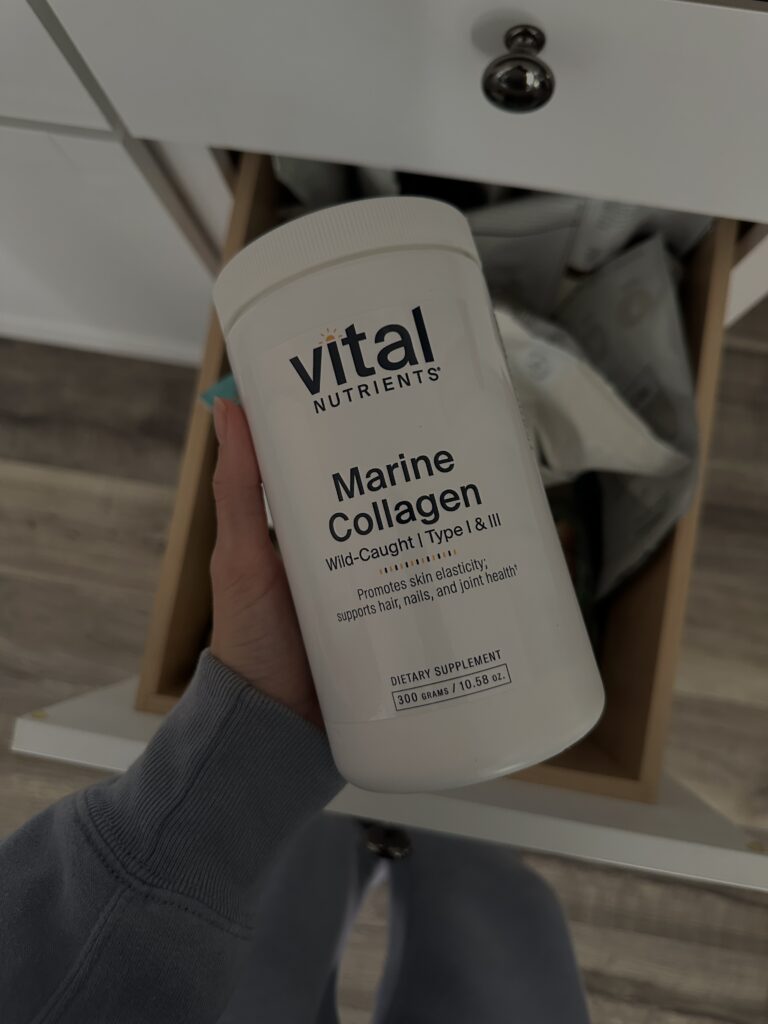
You might have heard that marine sources are superior. There isn’t much evidence that marine is absorbed better than bovine. However, it makes sense where this idea came from. Low molecular weight collagen is better absorbed and has shown the best results in the research. Marine sources tend to be lower molecular weight by default. So, since many collagen supplements don’t specify their molecular weight, opting for a marine source can be a good bet, but there are plenty of high-quality bovine options.
Uses
Skin:
Clinical trials have shown improvements in hydration, elasticity, and wrinkle appearance at 8-12 weeks.
Form to use: type I/III hydrolyzed peptides. Low molecular weight is best. Consistency matters more than amount here.
Bones:
Some good evidence in postmenopausal women specifically. But this is in combination with vitamin D supplementation and adequate calcium intake. Adding collagen may be better than taking vitamin D and calcium alone. Doses for bone support are 5 g/day.
Muscle:
Whey beats collagen for muscle protein synthesis in older women. Generally, collagen is not the supplement recommended for muscle maintenance. Research is still emerging here, but it is being explored alongside resistance training. Doses used for muscle support in the research are also much higher.
Take Aways
Collagen supplementation evidence is strongest for skin and bone support. In general, hydrolyzed collagen peptides in multi-gram dosing are the best supported across the board.
If you are considering collagen for muscle support, whey and animal protein are better options, and it must be paired with resistance training for optimal results.
Look for a statement about molecular weight; lower is better. “Di-“ and “tri- ” are good indicators too. Some higher-end products now list the fraction of di- and tripeptides (e.g “over 45% di/tripeptides), or “ultra-hydrolyzed”. If you can’t find that, marine/fish collagen tends to be manufactured at lower molecular weights. You can also often go to the brand website for more information on the quality.
Look for “hydrolyzed collagen” or “collagen peptides” as the ingredient, not “gelatin” or “native collagen”.
Amino Acid Supplementation
The problem: People struggle to meet daily protein intake to maintain muscle mass both in general and while on a GLP-1. The GLP-1 adds an added layer of decreased appetite, making it even more difficult.
Amino Acid Supplementation might be a partial solution: The proposal is that amino acid supplementation is a low-volume, low-satiety means to stimulate muscle protein synthesis.
Forms
Full essential amino acid (EAA) blends:
All nine essential amino acids are present. This is beneficial because it provides the body with the substrate it needs for muscle protein synthesis.
Branched-chain amino acids (BCAAs):
Three of the nine essential amino acids; insufficient on their own but might help with recovery in training.
Leucine alone:
When looking at amino acid blends in a supplement, you want to make sure there is enough leucine. So, should you just be supplementing with leucine alone? Think of leucine as the trigger, or catalyst. It is a very important amino acid for stimulating muscle protein synthesis. However, the body still needs enough substrate, and that’s going to come from the other essential amino acids or adequate protein intake through food.
Whole protein (whey, food):
The reference point everything else gets compared to. Whey and whole food protein are going to have the most consistent and long-term response.
First and foremost, resistance training with adequate intake is the number one goal. Amino acids are adjunctive when the amount of resistance training and protein intake are not sufficient.
Have you ever found yourself unable to eat a real meal right after a workout? Research shows that getting in a leucine-rich EAA drink within those first hours after a workout, when a meal isn’t available, does help your workout contribute to muscle building. This is most beneficial if you are training fasted or if it has been hours since your last meal.
Common misconceptions
More is better: The data indicate that once total protein exceeds the necessary amount, there is very little benefit to gain from supplementing with amino acids.
Supplements can make up for lack of resistance training: Nutrition without resistance training is not enough to preserve muscle, especially for those who are losing weight and/or on a GLP-1. Supplementation and nutrition are like the gas in a car, but exercise is the key!
Takeaways From the Research
Essential amino acid supplementation has its place, but for the overall response, whole protein from food or whey protein is the superior option for building muscle.
If you are getting enough protein and want an extra boost to encourage muscle synthesis, you could try supplementing with leucine alone.
The best supported use is EAAs for general muscle preservation in populations that struggle to consume adequate protein in their diet and participate in resistance training. They can also be beneficial for older adults who struggle to gain muscle.
EAA supplementation can be especially considered if decreased appetite and/or early satiety is a limiting factor.
An EAA drink within 1-2 hours of training is a reasonable “bridge” when you can’t eat a meal right away.
Timing of when you consume protein and amino acids is more important if you are not getting adequate protein throughout the day. In that case, consuming within at most 2 hours of exercise is beneficial. If you are getting adequate protein, timing matters less.
What to look for in an Amino Acid Supplement:
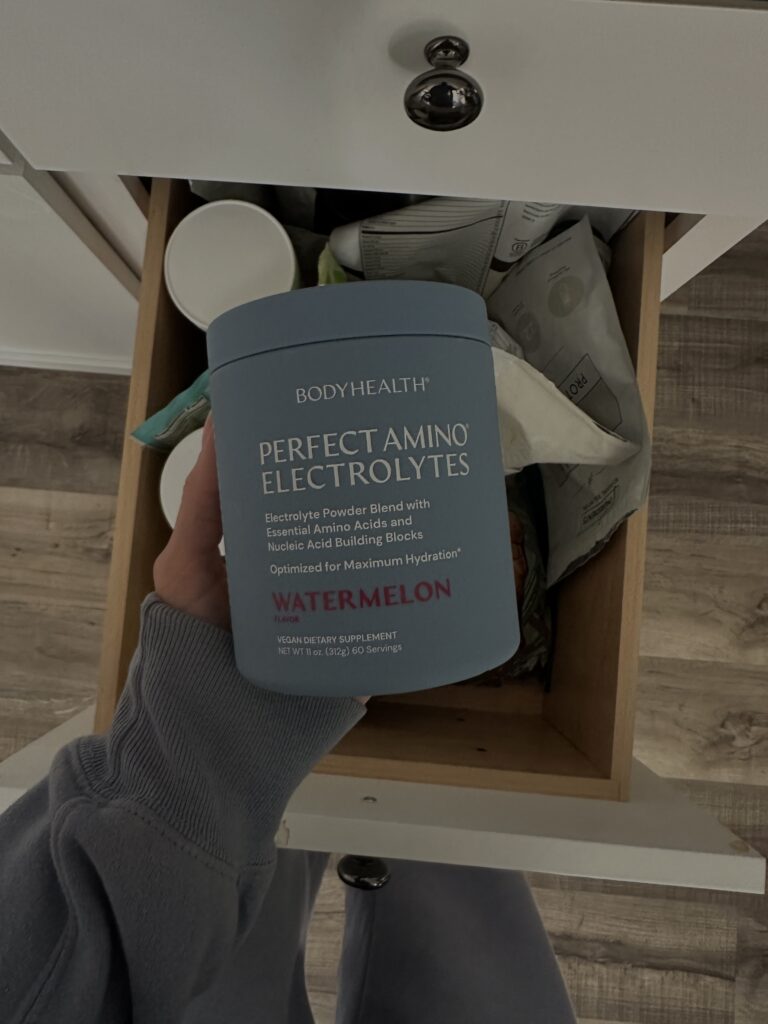
Full essential amino acid blend
Ideally, leucine content is disclosed per serving, aiming for 2-3 g of leucine per serving.
Third-party tested
Supplementing with Creatine
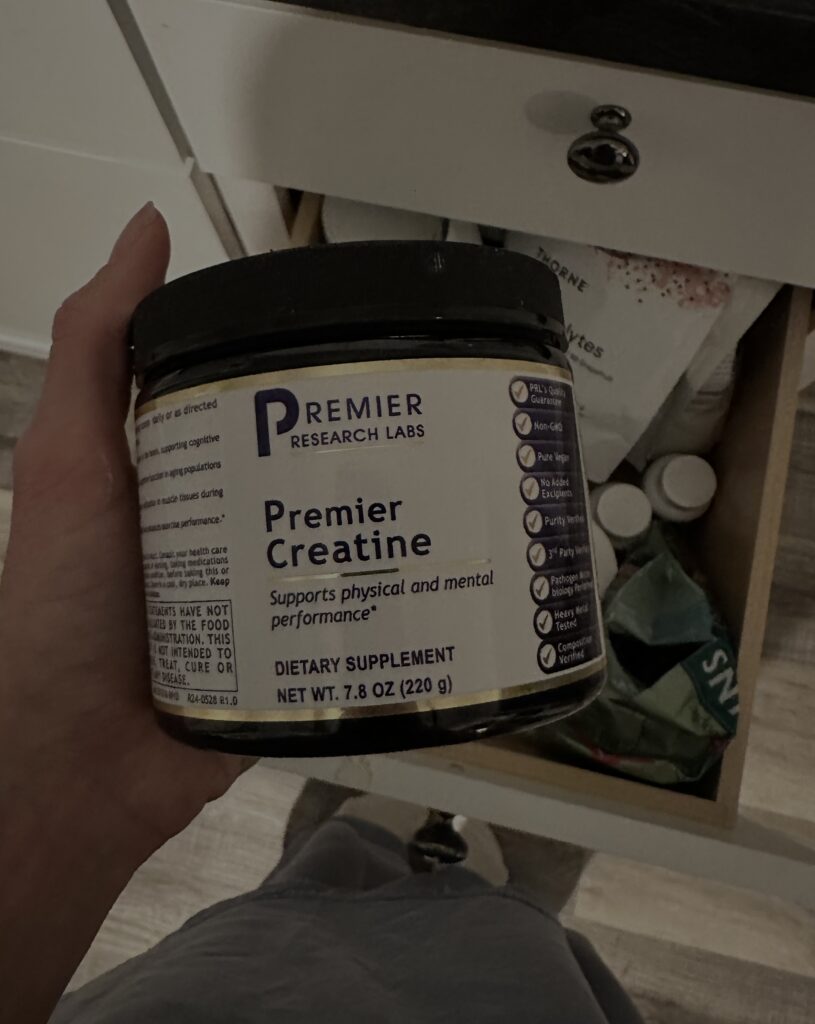
Creatine is a compound your body uses to produce energy. Your body already makes it from amino acids and food like animal protein. It is mostly stored in the muscle where it is used to generate ATP (energy) during short, intense bursts of activity like weight training or sprinting.
People seem to either love it or hate it. I’ve heard the bloating allegations, and I know it’s real. Let’s just start there since it’s such a common discussion. First of all, let’s separate two different phenomena: GI upset/bloating and water rention in muscle.
Building and Maintaining Muscle with Creatine
Creatine is different from amino acids in that it’s not supplying a building block for muscle; it mostly helps regenerate ATP (energy) so you can train more effectively, which then helps muscle growth. It’s an indirect effect, but being able to train harder is ultimately going to benefit muscle mass. It’s going to help you increase your weight and/or reps, allowing more progression over time.
Timing intake with your workouts isn’t something you have to worry about. Creatine works by saturating your muscles over time, not just momentarily. Studies comparing creatine taken before versus after the gym show similar results. This also means you should be taking your daily dose even on days you skip the gym. The goal is to keep the muscles saturated, which depends on consistency, not exercise timing. If you really want to optimize, muscle uptake of creatine is slightly higher with exercise or when taken with a meal, so taking it around a workout or with food is reasonable, but not required.
Supported Uses
Resistance training:
When the goal is to grow or maintain muscle mass, whether on GLP-1 or not, we usually encourage progressive overload and training close to failure. That means using weights heavy enough that the last 1-2 reps feel really difficult while you still maintain form, and gradually increasing the weight or the reps over time. Creatine is great for this because it gives the muscle more available energy, so you are able to meet and build on those challenges.
Middle-aged and postmenopausal women:
Women naturally have lower internal creatine stores, and supplementing with creatine can help lessen the effects menopause tends to have on lean muscle mass and strength. But again, strength training is a prerequisite.
Growing areas of interest:
Creatine’s benefit for strength training is well established. Aside from that, there is growing interest in its use to support brain health. Our brains use a lot of energy, and creatine may help support memory, mood, and general cognitive performance. The outcomes of human trials are mixed, but promising. It seems that the clearest benefit is for those who are aging, stressed, or sleep-deprived.
Common Misconceptions
“It builds muscle without training” – Like amino acids, the meaningful changes to muscle mass depend on resistance training.
“Creatine contributes to protein goals” – Unlike amino acids, creatine doesn’t supply anything meaningful toward a protein gap. So, if you are struggling to hit your protein goal with whole food or protein shakes, creatine isn’t going to help you bridge that gap.
“You MUST do a loading dose” – Loading only speeds up how fast the muscle saturates. A maintenance dose reaches the same endpoint, just slower, and with fewer GI side effects.
How Does It Compare to Amino Acids for Muscle?
Amino acids and creatine address different problems. If you had to choose only one, I would think of it this way: If you are struggling to meet your protein goals, EAAs might be more helpful for you. If you are doing okay on the protein, but want to maximize your progress in the gym, creatine might be for you. They aren’t in competition; creatine and EAAs together can have an additive effect. EAAs to supplement the protein gap if your appetite makes whole protein and whey difficult, and creatine to maximize your training.
Some people experience gassiness, abdominal bloating, feeling full, or changes in stool patterns. This is mostly explained by the fact that creatine draws water into the GI tract.
GI bloating and Water Weight
The good news: this is typically dose-related. It most commonly occurs at high doses, such as with a “loading phase” (usually 20 g/day), or when you first start taking it. This problem tends to go away after dropping down to a lower maintenance dose (around 5 g daily). If you’re someone who wants to use a larger amount, you could try starting at a lower dose (3- 5 g) and slowly work up. You could also split your daily intake into two doses (for example: two 3-5 g doses), or try taking it with food and enough water.
The “water weight” is different from isolated GI bloating. Just as creatine draws water into the gut, it also draws water into the muscles, causing mild swelling within the muscle tissue itself. This doesn’t go away with dose adjustment and is a normal and expected response; it’s actually part of the way it works.
Wrapping Up!
So, just like most health claims, there is some truth to the benefits of each of these, but context matters, and they aren’t a magical replacement for diet and lifestyle when it comes to supporting your health. They are supplements and are not meant to be used in isolation.
Decision Filter: Before implementing any of these supplements into your routine, find a provider who can help answer the following:
1. What do you want to use it for?
2. Does this supplement have evidence for that specific purpose? And if so, at what dose?
3. Are your daily protein intake and training covered first?
If you’d like help figuring out the best strategy for you when it comes to preserving or growing muscle mass, we are here to help!
Sources
Seki Y, Ohkuma RC, Miyakawa Y, Karakida T, Yamamoto R, Yamakoshi Y. Hyaluronan and chondroitin sulfate in chicken-vegetable bone broth delay osteoporosis progression. J Food Sci. 2024 Mar;89(3):1791-1803. doi: 10.1111/1750-3841.16962. Epub 2024 Feb 5. PMID: 38317402.
Matar, A., Abdelnaem, N. & Camilleri, M. Bone Broth Benefits: How Its Nutrients Fortify Gut Barrier in Health and Disease. Dig Dis Sci70, 1951–1961 (2025). https://doi.org/10.1007/s10620-025-08997-x
Iwai K, Hasegawa T, Taguchi Y, Morimatsu F, Sato K, Nakamura Y, Higashi A, Kido Y, Nakabo Y, Ohtsuki K. Identification of food-derived collagen peptides in human blood after oral ingestion of gelatin hydrolysates. J Agric Food Chem. 2005 Aug 10;53(16):6531-6. doi: 10.1021/jf050206p. PMID: 16076145.
de Miranda RB, Weimer P, Rossi RC. Effects of hydrolyzed collagen supplementation on skin aging: a systematic review and meta-analysis. Int J Dermatol. 2021 Dec;60(12):1449-1461. doi: 10.1111/ijd.15518. Epub 2021 Mar 20. PMID: 33742704.
Lee M, Kim E, Ahn H, Son S, Lee H. Oral intake of collagen peptide NS improves hydration, elasticity, desquamation, and wrinkling in human skin: a randomized, double-blinded, placebo-controlled study. Food Funct. 2023 Apr 3;14(7):3196-3207. doi: 10.1039/d2fo02958h. PMID: 36916504
Lampropoulou-Adamidou K, Karlafti E, Argyrou C, Makris K, Trovas G, Dontas IA, Tournis S, Triantafyllopoulos IK. Effect of Calcium and Vitamin D Supplementation With and Without Collagen Peptides on Volumetric and Areal Bone Mineral Density, Bone Geometry and Bone Turnover in Postmenopausal Women With Osteopenia. J Clin Densitom. 2022 Jul-Sep;25(3):357-372. doi: 10.1016/j.jocd.2021.11.011. Epub 2021 Nov 25. PMID: 34980546
Lugo, J.P., Saiyed, Z.M. & Lane, N.E. Efficacy and tolerability of an undenatured type II collagen supplement in modulating knee osteoarthritis symptoms: a multicenter randomized, double-blind, placebo-controlled study. Nutr J15, 14 (2016). https://doi.org/10.1186/s12937-016-0130-8
Rathmacher JA, Pitchford LM, Stout JR, Townsend JR, Jäger R, Kreider RB, Campbell BI, Kerksick CM, Harty PS, Candow DG, Roberts BM, Arent SM, Kalman DS, Antonio J. International society of sports nutrition position stand: β-hydroxy-β-methylbutyrate (HMB). J Int Soc Sports Nutr. 2025 Dec;22(1):2434734. doi: 10.1080/15502783.2024.2434734. Epub 2024 Dec 19. PMID: 39699070; PMCID: PMC11740297
Weijzen MEG, van Gassel RJJ, Kouw IWK, Trommelen J, Gorissen SHM, van Kranenburg J, Goessens JPB, van de Poll MCG, Verdijk LB, van Loon LJC. Ingestion of Free Amino Acids Compared with an Equivalent Amount of Intact Protein Results in More Rapid Amino Acid Absorption and Greater Postprandial Plasma Amino Acid Availability Without Affecting Muscle Protein Synthesis Rates in Young Adults in a Double-Blind Randomized Trial. J Nutr. 2022 Jan 11;152(1):59-67. doi: 10.1093/jn/nxab305. PMID: 34642762; PMCID: PMC8754581
Churchward-Venne TA, Burd NA, Mitchell CJ, West DW, Philp A, Marcotte GR, Baker SK, Baar K, Phillips SM. Supplementation of a suboptimal protein dose with leucine or essential amino acids: effects on myofibrillar protein synthesis at rest and following resistance exercise in men. J Physiol. 2012 Jun 1;590(11):2751-65. doi: 10.1113/jphysiol.2012.228833. Epub 2012 Mar 25. PMID: 22451437; PMCID: PMC3424729
Ferrando AA, Wolfe RR, Hirsch KR, Church DD, Kviatkovsky SA, Roberts MD, Stout JR, Gonzalez DE, Sowinski RJ, Kreider RB, Kerksick CM, Burd NA, Pasiakos SM, Ormsbee MJ, Arent SM, Arciero PJ, Campbell BI, VanDusseldorp TA, Jager R, Willoughby DS, Kalman DS, Antonio J. International Society of Sports Nutrition Position Stand: Effects of essential amino acid supplementation on exercise and performance. J Int Soc Sports Nutr. 2023 Dec;20(1):2263409. doi: 10.1080/15502783.2023.2263409. Epub 2023 Oct 6. PMID: 37800468; PMCID: PMC10561576
Wirth J, Hillesheim E, Brennan L. The Role of Protein Intake and its Timing on Body Composition and Muscle Function in Healthy Adults: A Systematic Review and Meta-Analysis of Randomized Controlled Trials. J Nutr. 2020 Jun 1;150(6):1443-1460. doi: 10.1093/jn/nxaa049. PMID: 32232404
Kerksick CM, Arent S, Schoenfeld BJ, Stout JR, Campbell B, Wilborn CD, Taylor L, Kalman D, Smith-Ryan AE, Kreider RB, Willoughby D, Arciero PJ, VanDusseldorp TA, Ormsbee MJ, Wildman R, Greenwood M, Ziegenfuss TN, Aragon AA, Antonio J. International society of sports nutrition position stand: nutrient timing. J Int Soc Sports Nutr. 2017 Aug 29;14:33. doi: 10.1186/s12970-017-0189-4. PMID: 28919842; PMCID: PMC5596471
Forbes SC, Krentz JR, Candow DG. Timing of creatine supplementation does not influence gains in unilateral muscle hypertrophy or strength from resistance training in young adults: a within-subject design. J Sports Med Phys Fitness. 2021 Sep;61(9):1219-1225. doi: 10.23736/S0022-4707.20.11668-2. PMID: 34610729.